Introduction: The Myth of Exclusivity
In the pantheon of luxury, one name stands above all others. It is a name that evokes images of orange boxes, silk ribbons, and waiting lists that stretch on for years. For decades, the narrative surrounding the Hermès Birkin and Kelly has been carefully cultivated: these are not just bags; they are artifacts. They are rare. They are elusive. They are "Quota Bags," offered only to the chosen few who have proven their loyalty through five-figure spending histories on porcelain ashtrays, blankets, and equestrian gear.
But in the quiet, discreet corners of the fashion world, a different narrative is emerging. It is a story not of scarcity, but of Artisan Grade mastery. It is the story of private ateliers—independent workshops staffed by master leatherworkers, some of whom trained in the very same French houses they now rival.
This is the open secret of the ultra-wealthy: you do not need to play "The Game." You do not need to humiliate yourself before a sales associate or spend the equivalent of a luxury sedan on "prespend" items you do not want. The rise of specialized platforms like Top Tier Hermes and technical authorities like Artisan Grade has democratized access to the highest level of leathercraft in the world.
This article is not about "fakes" in the traditional sense. We are not discussing the vinyl knockoffs sold on Canal Street. We are discussing High-Tier, Fully Hand-Stitched leather goods that share the same DNA—the same Weinheimer leather, the same Fil Au Chinois thread, and the same saddle-stitched construction—as the bags sitting in the boutique window.
Welcome to the world of the Private Atelier.
Part I: The Anatomy of a Legend (Why It Costs So Much)
To understand why a Top Tier replica commands a price of $1,000 to $3,000 (versus a $50 DHGate dupe), you must first understand the engineering of the original. A Birkin is not expensive because of the logo; it is expensive because of the labor.
1. The Saddle Stitch (The Heart of the Bag)
The single most critical distinction between a "fake" and an Artisan Grade bag is the stitching method.
-
The Lock Stitch (Machine Made): 99% of handbags, including many luxury brands like Gucci and Prada, are sewn by machine. Two threads interlock inside the leather hole. If one thread breaks, the entire seam can unzip. The stitches appear as a straight, uniform line (------).
-
The Saddle Stitch (Hand Made): This is the Hermès standard. A single artisan uses two needles on a single thread, passing them through the same hole in opposite directions. This creates a knot at every single stitch. If one stitch is cut, the rest hold firm. Visually, this creates a distinct, angled "chevron" pattern (//////).
The "Artisan Grade" Difference:
Platforms like ArtisanGrade.com specialize exclusively in this technique. They do not sell machine-stitched bags. Their artisans spend 18 to 24 hours hand-sewing a single Kelly handle. When you look at a macro shot of their work (like the image above), you see the tell-tale slant of the linen thread—the signature of a human hand, not a robot.
2. The Leather Sourcing (The Skin)
You cannot fake the touch of top-tier leather. Real luxury leather smells of tannins, earth, and beeswax. It feels oily and alive. It develops a patina. Cheap leather smells of chemicals and feels like plastic.
Top-tier ateliers source from the same tanneries as the heritage brands:
-
Weinheimer Leder (Germany): The source of "Togo" and "Clemence" calfskin.
-
Tanneries Haas (France): The source of "Epsom" and "Barania."
-
Annonay (France): The source of "Box" calf.
When you order from a curated collection like Top Tier Hermes, you are paying for these specific, imported hides. The reason their "Blue Jean" Togo looks exactly like the authentic version is simple: it is often the exact same batch of leather, purchased from the same supplier.
3. The Hardware (The Jewelry)
The hardware on a Birkin or Kelly is not just metal; it is jewelry.
-
The Plating: Authentic hardware uses heavy precious metal plating (Gold or Palladium). It has a specific "Champagne" hue—a soft, pale gold. Cheap fakes use "Cheddar Gold"—a bright, yellow, brassy tone that screams "counterfeit" from across the room.
-
The Pearling (Perlage): This is the ultimate "tell." On a hand-made bag, the pins that hold the hardware plates together are hammered by hand until they form a perfect, round mushroom cap. On a machine-made bag, they are flat. Top Tier Hermes bags are celebrated for getting this perlage correct, a detail that only the most seasoned authenticators usually notice.
Part II: The "Tier System" Explained
The replica market is a pyramid. To ensure you are getting what you pay for, you must understand the hierarchy.
Tier 4: The Budget "AAA" (The Street Level)
-
Price: $50 - $150
-
Source: DHGate, AliExpress, Street Vendors.
-
Material: PU (Polyurethane) or "Genuine Leather" (the lowest grade of real leather, made from scraps bonded together).
-
Stitching: Machine stitch (straight line). Nylon thread.
-
Verdict: These are toys. They look fine from 10 feet away but fall apart upon inspection.
Tier 3: The Mid-Tier (The "Lush" Fakes)
-
Price: $200 - $500
-
Source: Instagram Sellers, Facebook Groups.
-
Material: Mid-grade calfskin, but often domestic (Chinese) rather than imported.
-
Stitching: Machine stitch, sometimes with a "slanted" needle to mimic the hand-stitch look, but still unravels like a machine stitch.
-
Verdict: Good for a night out, but will not fool an expert.
Tier 2: High-Tier / "Semi-Handmade"
-
Price: $600 - $900
-
Source: Specialized WeChat sellers.
-
Material: Imported leather, but often uses machine stitching for the hidden seams and hand stitching only for the visible areas (handles, flap).
-
Verdict: A solid compromise, but lacks the soul of a fully handmade piece.
Tier 1: The "Artisan Grade" (The Private Atelier)
-
Price: $1,200 - $3,000+
-
Source: ArtisanGrade.com and TopTierHermes.net.
-
Material: Full-grain imported hides (Haas, Weinheimer).
-
Stitching: 100% Saddle Stitch (Fully Handmade). Every inch is sewn by hand.
-
Thread: Au Chinois beeswax-coated linen thread (the exact brand Hermès uses).
-
Verdict: Structural twins to the authentic. These are the bags that are often sold on the secondary market as "pre-loved" authentics because they pass virtually every test except a receipt check.
Part III: Inside the Atelier – How to Spot Quality
So, you have decided to invest in an Artisan Grade piece. How do you verify that you are getting what you paid for? Here is the checklist used by professional authenticators, and how the collections at ArtisanGrade.com stack up.
1. The Smell Test
This sounds primitive, but it is the most accurate test. When you unbox a bag from Top Tier Hermes, the first thing that should hit you is the smell. It should be rich, earthy, and leathery.
-
Why: High-quality vegetable tanning uses natural tannins (bark, leaves). Cheap tanning uses chromium and formaldehyde. If your bag smells like a shower curtain or gasoline, it is low-tier.
2. The "Return" of the Grain
Press your thumb hard into the leather of a Togo or Clemence bag.
-
The Reaction: On high-quality skin, the grain pattern should shift and wrinkle around your thumb, and then slowly "return" to its original shape when you release.
-
The Fail: On cheap leather, the material feels stiff and plastic-like. It doesn't wrinkle; it just bends.
3. The Stamp (The Foil)
The "Hermès Paris Made in France" stamp is often where factories get lazy.
-
The Font: It must be crisp, clean, and perfectly centered. The letters should not bleed into each other.
-
The Texture: It should be heat-stamped into the grain, not just printed on top of it. You should be able to feel the indentation with your fingernail.
-
The Color: The foil (Gold or Silver) should match the hardware perfectly.
4. The Handle Shape
A Birkin handle is not round; it is slightly flattened. It should stand up straight on its own but have a slight flexibility.
-
The Test: Squeeze the handles. They should feel firm but padded. If they feel like there is a hard plastic tube inside, it is a low-tier fake. Artisan Grade handles are filled with layers of leather cork, which mold to your hand over time.
Part IV: The Buying Guide – Navigating the Catalogs
Entering the world of Top Tier Hermes can be overwhelming. The catalog is vast, covering sizes from the tiny Kelly 20 to the massive Birkin 40. Here is a guide to the most popular leathers and styles to help you make your first "Private Atelier" choice.
The Leathers & Exotics
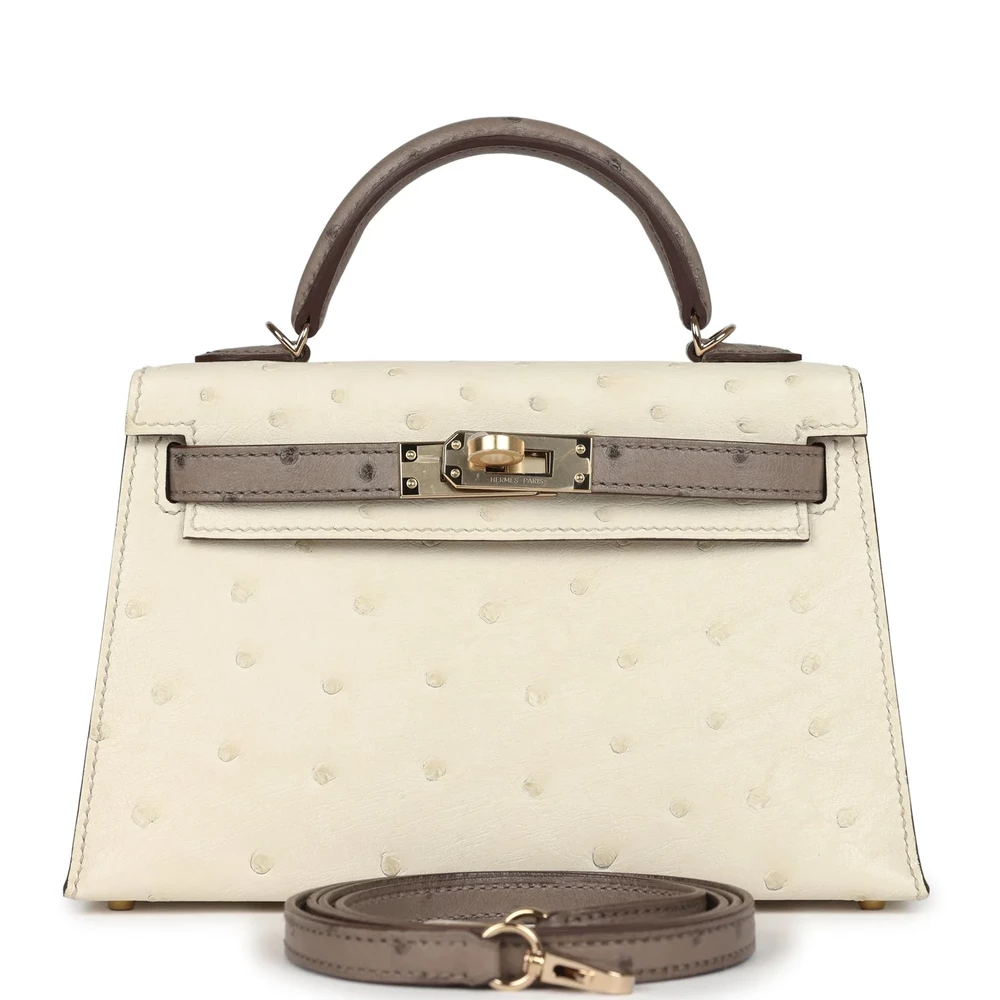
As seen in the stunning Ostrich Kelly 20 above, the capabilities of private ateliers extend far beyond basic calfskin.
-
Ostrich: Recognized by its distinctive "quill" bumps (follicles). A true artisan bag will have flattened quills that feel soft, not prickly. Sourced from South Africa (Klein Karoo).
-
Togo: The most popular choice for a first bag. It is a baby calf leather with a pebbled grain. It is scratch-resistant, holds its shape well, and is relatively lightweight.
-
Best For: Birkin 30, Birkin 35 (Daily Use).
-
-
Clemence: Similar to Togo but softer, heavier, and with a larger grain (blister). It gives the bag a "slouchy," casual look.
-
Best For: Picotin, Lindy, Large Birkins.
-
-
Epsom: An embossed leather. It is very rigid, lightweight, and shows vibrant colors beautifully. However, it can lose its texture over decades of heavy use.
-
Best For: Kelly Sellier, Constance.
-
-
Chevre (Goat): Lightweight, shiny, and durable. It has a distinct spine detail down the center.
-
Best For: Mini Kelly, Birkin 25.
-
-
Box (Calf): The classic, smooth, heritage leather. It scratches easily but develops a beautiful mirror-like patina (shine) over time.
-
Best For: Vintage-style Kellys.
-
The Styles
-
Birkin: The tote. Open top, two handles. Casual chic.
-
Size Guide: B25 (Evening/Cute), B30 (The Goldilocks Size), B35 (Workhorse/Laptop).
-
-
Kelly: The lady. Single handle, shoulder strap, closed flap.
-
Retourne vs. Sellier:
-
Sellier: Sharp edges, stitching on the outside, rigid structure. Use Epsom or Box leather. Sourced best from ArtisanGrade.com due to the complex edge-stitching.
-
Retourne: Soft edges, stitching on the inside, relaxed look. Use Togo or Clemence.
-
-
Part V: The Ethics & Economics of "Superfakes"
The conversation around replicas is often clouded by moral outrage, usually from the brands themselves. But let’s look at the economics.
In 2024, a Birkin 25 in Togo leather retails for approximately $11,000 in the boutique.
However, to be offered that bag, you typically need a "prespend" ratio of 1:1 or 2:1. This means you must spend $10,000 to $20,000 on other items first.
Total Cost of Acquisition: $20,000 - $30,000.
The estimated cost of materials and labor for that same bag? Approximately $1,000 - $1,500.
When you buy from a site like ArtisanGrade.com, you are paying roughly $1,500 - $2,500.
You are paying for the materials (imported leather is expensive) and the labor (a master artisan’s time is valuable). You are paying the actual value of the product, without the $20,000 "Brand Tax" and the humiliation of the "prespend" game.
For the modern woman who understands value, the choice is logical. Why buy a label when you can buy the object? Why pay for the marketing budget of a multi-billion dollar conglomerate when you can support a private artisan?
The "Quiet Luxury" Movement
This shift aligns perfectly with the current trend of Quiet Luxury. The goal is no longer to scream "I have money" with a logo. The goal is to whisper "I have taste" with quality. A hand-stitched, unbranded leather bag (or one where the brand is discreet) signals confidence. It says that you know the difference between a good bag and a bad bag, regardless of where you bought it.
Part VI: Common Myths & FAQs
As you explore Top Tier Hermes and Artisan Grade, you will likely have questions. Here are the most common myths debunked.
Myth 1: "Replicas are illegal to buy."
-
Fact: In most Western jurisdictions (including the US and UK), it is illegal to sell counterfeits, but it is generally not a crime to buy one for personal use. Customs seizure is a risk (which is why these sites use "Triangular Shipping"), but you are not going to jail for owning a fake bag.
Myth 2: "You can always tell a fake."
-
Fact: You can always tell a cheap fake. But with Artisan Grade bags, even the sales associates at Hermès have been known to be fooled. There are countless stories of "superfakes" being accepted for spa treatments (cleaning/repair) at boutiques because the construction is identical.
Myth 3: "Replicas don't last."
-
Fact: A cheap PU bag will peel in 6 months. A fully hand-stitched bag made of Weinheimer Togo leather will last 20, 30, even 50 years. It is made of the same organic material as the original. If you condition it and store it properly, it becomes an heirloom.
Myth 4: "It comes with a receipt."
-
Fact: Many high-tier sellers include fake receipts. Advice: Throw them away. They are tacky. The bag should speak for itself. You don't carry the receipt around with you; you carry the bag.
Conclusion: The Smart Woman's Secret
The fashion industry is changing. The veil has been lifted. We now know that "Made in France" often means "Assembled in France from parts made elsewhere," and that "Exclusive" often just means "Artificially Restricted."
In this new landscape, the Private Atelier represents the ultimate hack. It is a way to access the pinnacle of leathercraft—the Saddle Stitch, the Togo grain, the hand-rolled handles—without participating in the exploitative economics of the luxury boutique system.
Platforms like ArtisanGrade.com and TopTierHermes.net are not just selling bags; they are selling freedom. Freedom from waitlists. Freedom from snobby sales associates. Freedom to own the bag of your dreams, in the color you want, right now.
So, the next time you see a woman walking down Madison Avenue or Bond Street with a stunning Etoupe Birkin 30, ask yourself: Did she spend $30,000 and wait two years? Or does she know the secret?
Does she know about the Artisan Grade?
Glossary of Terms (For the Connoisseur)
-
Blind Stamp: The hidden code inside the bag that indicates the year of manufacture and the artisan ID.
-
Chevre: Goat leather, often used for the lining of high-tier bags.
-
Clochette: The leather "bell" that hangs from the handle and hides the keys.
-
Fil Au Chinois: The specific brand of waxed linen thread used by Hermès and top-tier artisans.
-
Glazing: The resin coating applied to the raw edges of the leather. It should be thin and matte.
-
Hardware (GHW/PHW): Gold Hardware / Palladium (Silver) Hardware.
-
Moderne: A newer, machine-assisted style (Avoid this if you want true artisan grade).
-
Perlage: The "pearling" or hand-hammering of the hardware pins.
-
Retourne: "Turned out." The bag is sewn inside out and then turned, creating soft edges.
-
Saddle Stitch: The hand-sewing technique that defines the brand.
-
Sellier: "Saddler." The bag is sewn right-side out, creating sharp, rigid edges.
-
Sangies: The straps that close the bag.
-
Touret: The center turn-lock mechanism.
About the Author
This guide was compiled by an independent leathercraft consultant and luxury market analyst. With over a decade of experience in sourcing, authenticating, and deconstructing high-end leather goods, the author specializes in educating consumers on the technical nuances of "Superfake" vs. Authentic construction.
